Instagram
 

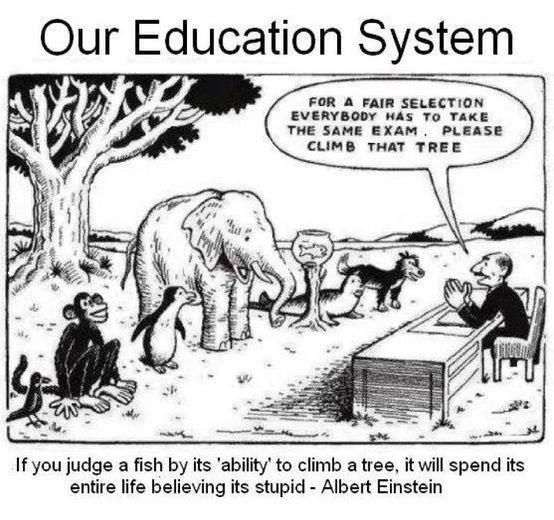
"If you judge a fish by its 'ability' to climb a tree, it will spend its entire life believing it's stupid." ~ Albert Einstein

Albert Einstein was a smart man –and his intelligence was not measured by a standardized test.

Just the other day I was telling my daughter that regardless of how she does on a standardized test or a placement test, it does not make her less smart, less talented, or mean that she won’t be successful in life if she doesn’t get a perfect score, or place in a top percentile, or qualify for a special program.

It seems that many of her friends feel pressured to score practically perfectly on tests in school.  While I agree that children should strive to do academically well, a perfect performance isn’t going to guarantee them a six figure salary upon graduation, nor a permanent position until retirement with a single firm.  The stress that some of these children are feeling is placed in part on their shoulders by their parents, and in part by some teachers.  I don’t blame them.  I just don’t agree with them.  Society has said that it’s important that children take these tests, and that you should want to be the best of the best and outperform all of the rest.  But I stop and ask myself – why?  Bragging rights?

Some of these parents even enroll their children in extra optional math and language classes on weekends in hopes that they will score off the charts.  The poor kids don’t get a break to play Barbies or run around outside with their friends, it seems.  To me, play time is a form of education, social adaptation, and imagination enrichment at a young age – which is just as important as doing well in school.  And everyone needs to blow off some steam – even kids!

The local school district tests kids for a program they call "Reach", which allows selected students to do special projects and additional activities outside of the regular classroom. They can learn about artists and explore topics in science that wouldn’t be covered during a normal classroom stint.  It is a great program.  It actually adds back to the curriculum a lot of the things that have been taken out over the years because teachers are now more focused teaching towards having kids do well on state-wide standardized tests – so they “teach to the test” and leave out the “rest”.  Well, I think the “rest” is just as important.

So now, with a “regular” curriculum, as a result of everything being geared towards “the tests”, there are less field trips, less detours from required reading, less artistic activities, and the kids learn exactly what they need to learn, so hopefully a majority of the students in a school district will do well and make the schools and faculty shine.  They learn no more; they learn no less; and they are missing out on other types of learning that are equally essential. Some of my most memorable times in school were when the teacher deviated from a prescribed reading list, and I got to read books that other classes weren’t reading.  Taking field trips to museums, radio stations, TV studios, and nature preserves was amazing, and I learned a lot that you couldn’t read from a book or calculate in a math problem.

Sure, people want to have some point of evaluation of how well their children are being educated, but a lot more goes into that than filling in dots on a piece of paper or writing an essay.  There are hundreds of colleges that agree with me, actually.  Many of them have stopped using standardized tests as admission criteria.  Unfortunately, “ the same cannot be said for k-12, where scores on achievement tests are in part used for everything from admitting students to prestigious public schools to placing students in gifted or remedial programs, allocating federal funding, and even evaluating teachers.” (Time Magazine, October 2012)  If you need more reasons why standardized tests as a measurement of skill and intelligence is not all that it’s cracked up to be, here you go.  Add in, that for some children, English is their second language, and they may be a genius in their native tongue, but due to their inability to translate the test questions perfectly, they just got dinged for being unequally bilingual.

Here’s some irony for you – I’m a writer and I love to read.  I don’t have astigmatism, and I have 20/20 vision (thankfully!) but I can never truly grasp the meaning of what I read the first time around.   I always have to read something 2 – 3 times before my comprehension is the same as others who “get it” the first time they read a paragraph, chapter, or book.   It takes me twice as long to read a letter, email, book, or contract as your average person.  It’s been this way for me since I was five and first learned how to read.  Teachers thought my comprehension skills would improve over the years.  It never measurably did.  And I never let it ruin my love of literature.  Does that make me any less knowledgeable?  No.  Because something takes me a little more time to accomplish, does that make me less “smart”?  No.  But on a standardized test if I didn’t finish a reading comprehension section in the time allotted, the score sure would make me look stupid!

Tests, do not measure the achievements or the potential of students.  Some of our greatest minds in society didn’t have the greatest test scores.

So, my daughter just took a Reach placement test for students in second grade. Not everyone qualifies for the special program. We don't know how she did yet.   If she gets in, we’ll be happy; and if she doesn’t, we’ll be ok with that, too.  I told her that the end result really doesn't matter because so many people possess talents that they don't even test for! What if you're an excellent horseback rider? They certainly don't test for that in school! You can juggle? Well that's not evaluated. She told me most of the test was centered around logic problems. I thought to myself right away, well, that's not exactly broad. What if you are a creative writer but just stink at math?  What if your strengths are in other areas?  Are you any less deserving of learning outside of the (test) box? 

I told my daughter that no matter what the results are, she should not feel like she doesn't have talent, and she's definitely still special. Some of the most brilliant minds and the most talented people possess skills that can't be measured on standardized tests.

What I want to say to all of the kids out there is – when you don’t get a high score on a test to place into a certain program, or to get into a certain college, or are not in the top percentile on a standardized test – realize that you are off the charts – their charts.  It does not make you any less smart than anyone else.  It does not mean you are not talented.  It doesn’t mean that you can’t do great things with your life!  Because you can! <-- THAT, is what should be taught in schools!


Picture
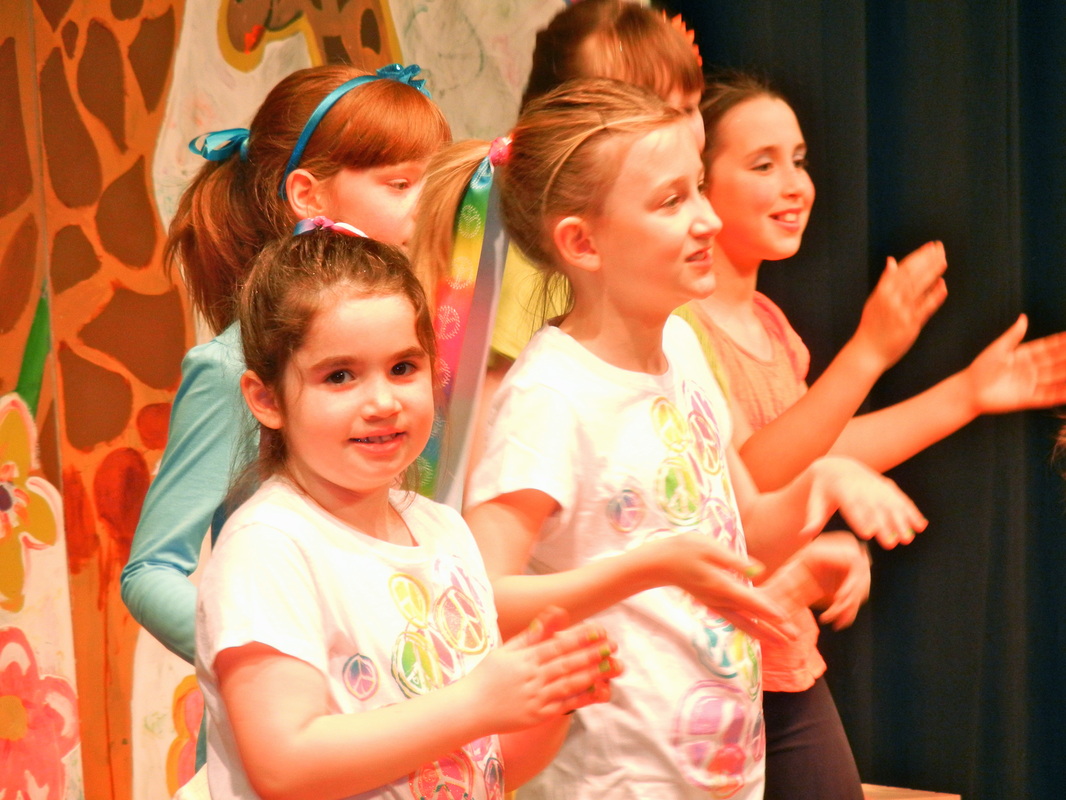
Children at a Middletown Arts Center Miss Sherri Concert (Credit: Jennifer Smiga)

All Ages Celebrate Their Love for the Arts, De-stress and Get Fit with Heart Healthy and Fun Classes and Events 
 

PRESS RELEASE:  Middletown, NJ (January 31, 2013) – Throughout the month of February, the Middletown Arts Center (MAC), located in the heart of Middletown on 36 Church Street, will celebrate Valentine’s Day with themed events and classes for adults and children. From crafting and concerts to yoga and legos, there are many ways to celebrate your love for the arts, de-stress and get fit. Call the Middletown Arts Center at (732) 706-4100 to preregister for any of the events and classes featured below. For a full menu of classes, visit www.middletownarts.org. Classes are prorated, so students are encouraged to join at any time.  
 
Saturday heART Fun
Saturday, February 9th, 9:30-10:30 a.m. (for children ages 3-5)
Saturday, February 9th, 11:00-12:30 p.m. (for children ages 6-10)
A “Let’s Get Messy” Saturday Art Fun class has your little artists exploring different art materials and techniques with Miss Laurie Ruggeri. Children will enjoy making their very own Valentine’s Day cards, heartfelt crafty paintings and more. To attend the February 9th class only, the cost is $10 per child.  Cost to attend eight sessions is $100 for MAC members and $110 for non-members. 

Discover Your Radiant Heart Through Yoga 
Starting, February 13th, Wednesdays, 9:30-10:30 a.m.
This February, it’s all about mind, body and heart health as students learn about the power and importance of the Heart Chakra in the MAC’s Gentle Yoga class with Cornelia Mazza. Students will learn to tune into this area of the body to find increased energy and love for themselves and for those around them. Drawing from ancient yogic teachings as well as present-day practices, let Cornelia guide you in exploring the different facets of your radiant heart center. Students will also learn relaxation, breathing, and stretching to benefit mind-body health. All levels may join this slow moving classical yoga. Each class ends with a guided relaxation meditation. Please bring a yoga mat and towel to class. Cost to attend for the month of four sessions is $44 for MAC members and $48 for non-members. 
 
Build Your Valentine with LEGOs (for children ages 6-9)
Thursday, February 14th, 4:00-5:30 p.m.
Create your very own Valentine with lego building blocks in the MAC’s Bricks 4 Kidz class. Each student will choose to build and take home their very own red heart, musical note or picture frame. Cost is $5 per child.
 
“Miss Sherri Live TV” Lovey Palooza Anniversary Concert (for all ages)
Friday, February 15th, 4:30 to 5:30 p.m.
Families will enjoy a rockin’ “Miss Sherri Live TV” Lovey Palooza Anniversary Episode filmed in the Middletown Arts Center theatre. This episode will be aired on Comcast 21 and Fios 26. Tickets are $5 per person and children under one-year are free.
 
Kiddie Fun Valentine’s Party (for children 4 -8)
Friday, February 15th, 6:00-10:00 p.m.
There is no sweeter way for a child to celebrate Valentine’s Day then surrounded by friends making crafts, playing games, watching movies and eating yummy snacks.  While parents are spending time together during a romantic night out, the little ones can celebrate too at the MAC’s Valentine Party Night with Miss Maria. Pizza, drinks and snacks will be provided. The cost is $25 per child. Pre-registration is required.
 
Pump Up Your Heart at Zumba (for ages 16 and up)
Sunday, February 24th, 11:00 a.m. -12:30 p.m.
Join MAC Zumba Instructor Joanna Shearer for an exciting 90-minute Zumba Fitness Class with Zumba Jammer from Paris, Knzo Mendy. Doors will open at 10:30 a.m. Cost is $15 in advance or $20 at the door. The event is open to the public and space is limited.
 
Relax Your Heart with the Ancient Art of Tai Chi Chuan (for adults)
Mondays 6:00-7:00 p.m. and/or Fridays 9:00-10:00 a.m.
Tai Chi Chuan is an ancient art that embodies China’s most profound concepts and principles of health and movement. Practiced at a slow and even speed, Tai Chi promotes relaxation, posture, and balance. These simple movements are widely acknowledged to help calm the emotions, focus the mind and strengthen the immune system. A simple 1-2-3 method of the popular Yang-style (24 poses) is taught, along with simple exercises that relax and rejuvenate. Cost to attend 12 sessions is $180 for MAC members and $200 for non-members.  
 
Art for the Mind, Body and Soul (for adults)           
Mondays 10:00 a.m. - 12:00 p.m. or 7:00 - 9:00 p.m.
Relax and unwind in this enjoyable class that will guide you through the process of making your own special vision board, creating a mandala, designing a zen garden and more. Let go of stress as you take time out to be imaginative and creative. Cost to attend eight sessions is $120 for MAC members and $132 for non-members.


About the Middletown Arts Center

The Middletown Arts Center (MAC) is an award-winning, state-of-the-art facility run by the nonprofit Middletown Township Cultural and Arts Council and is dedicated to bringing quality arts programming and events to Middletown and surrounding communities. The MAC offers affordable enrichment programs and entertainment for all ages and abilities.  Visit www.middletownarts.org for more information. The MAC can also be found on Facebook at Middletown Arts Center and Twitter @MiddletownArts.
 
 
Picture
Dr. Alison Block (Credit: Stephen Lacko)


Presentation by Alison P. Block, PhD., licensed psychologist and Director of the Health Psychology Center in Little Silver

Tuesday, January 29th, 7:30 – 9:00 p.m., Middletown High School North Library, 63 Tindall Rd, Middletown, NJ


PRESS RELEASE:  Middletown, NJ (January 18, 2013)- On Tuesday, January 29th, 2013 from 7:30 to 9:00 p.m., the Middletown Township Friends of Different Learners will host "Smart but Scattered: Helping Students Cope with Executive Functioning Challenges" presented by Dr. Alison Block at  Middletown High School North's library on 63 Tindall Road in Middletown, NJ. Teachers, parents and anyone that would benefit from understanding executive functioning and how it can affect the learning environment are invited to attend.

“Many children from across the region are struggling to maintain structure and stability post-Hurricane Sandy. It's important for parents and teachers to help these children, whether directly affected by the storm or not, to feel grounded and safe,” said Dr. Alison Block, licensed psychologist and Director of the Health Psychology Center, Little Silver. “Helping them to cope with executive functioning issues is a good start to creating a "new normal" in their scattered world."

Poor executive function can impact a student academically, socially and emotionally. Dr. Block notes that your child may be experiencing problems with executive functioning if they consistently have a disorganized desk and messy backpack; lose things often; forget to finish or turn in assignments; have trouble getting started or sustaining effort during homework; seem to “space out” when given complex instructions; or have difficultly planning ahead and managing time. They may also have trouble performing essential mental tasks, including planning, strategizing, organizing, setting goals and completing projects.

Join the Middletown Township Friends of Different Learners and Dr. Block for "Smart but Scattered: Helping Students Cope with Executive Functioning Challenges" so you can learn how to help your child overcome his or her executive function challenges. The event is free, but online registration is required at http://mtfodlsbs13.eventbrite.com/. Contact Dr. Alison Block for more information at http://dralisonblock.com/.

About Dr. Alison Block

Alison P. Block, PhD. is a licensed psychologist and the Director of the Health Psychology Center in Little Silver. In her Little Silver practice, Dr. Block works with many children and adolescents with anxiety disorders, depression, academic and sports performance issues and other challenges. She is also the psychologist for the Department of Medicine at Monmouth Medical Center and a clinical instructor in Medicine at Drexel University.

About The Middletown Township Friends of Different Learners 

The Middletown Township Friends of Different Learners is a network of parents who meet monthly to support each other when experiencing a spectrum of learning differences including ADHD, dyslexia, behavior issues and a wide range of specific disabilities. Contact mtfodl@gmail.com for more information.


Picture
Miss Deena and Her Teen Dance Program (Credit: Jennifer Smiga)


Middletown Arts Center Registration Now Open for All Ages for Winter – Spring Classes In the Arts, Dance and Music

PRESS RELEASE:  Middletown, NJ (January 11, 2013) – Class registration for Winter through Spring 2013 is now open at the Middletown Arts Center (MAC), located on 36 Church Street in Middletown, NJ. The institution is encouraging adults and children of all ages and abilities to make 2013 the year to explore the arts. This past fall left many families with little or no time to spend together, but the Middletown Arts Center invites the public to visit its 23,000 square-foot arts facility for some much needed rest, relaxation and entertainment. Visit www.middletownarts.org for a full listing of classes. 

The Middletown Arts Center’s arts programming allows members and non-members to discover their inner artist, musician or dancer and also offers children unique activities to explore their imagination and express themselves. The classes offered for children include DoOdle Dude’s cartooning and animation, musical theatre fun, puppetry, fashion design, guitar, dance classes for boys and girls, kiddie rock concerts and music lessons with Miss Sherri and much more.  There are also exercise classes available for adults looking to carve out some time to de-stress in the New Year. Classes include Tai Chi, Zumba, Yoga, Hula Hooping, authentic Argentine tango, Irish-step, tap and ballroom dance.

For individuals and families in need of financial assistance due to Sandy, please contact Maggie O’Brien, the Middletown Art Center’s Executive Director, at 732-706-4100 and she will discuss opportunities for discounted programming. MAC members also receive discounts on classes and camps throughout the year.

Join the Middletown Arts Center Team The Middletown Arts Center is currently looking for artists and educators to join its team. Individuals who are interested can contact Maggie O’Brien at 732-706-4100. The MAC is currently looking to expand its programing by offering classes in adult crafts such as jewelry, beading, fiber and photography, as well as children’s classes in film making, animation, advanced art, drawing and arts and crafts.

About the Middletown Arts Center The Middletown Arts Center (MAC) is an award-winning, state-of-the-art facility run by the nonprofit Middletown Township Cultural and Arts Council and is dedicated to bringing quality arts programming and events to Middletown and surrounding communities. The MAC offers enrichment programs and entertainment for all ages and abilities.  Visit www.middletownarts.org for more information. The MAC can also be found on Facebook at Middletown Arts Center and Twitter @MiddletownArts.


So let’s get down to the business of boobs.  No, this is not some x-rated blog – sorry to disappoint.   Actually, I got to writing it because of an impending topic for a radio show I will be on soon.  (Yes, broadcasts are not all impromptu. There is some planning in advance!  But that’s another topic for another day.)


If you are a first time mother, or a mother-to-be, or maybe just a curious guy that was afraid to ask questions about breastfeeding for fear of getting slugged, you might be wondering about what really happens when you try to breastfeed your baby – the stuff no one ever tells you that you can’t find in books or are too embarrassed to bring up over breakfast.  This blog is my way of sharing my own experiences with breastfeeding, so that you may have more of a clue than I did, and know what to expect after your baby is born.

Maybe you are even a long-time mom and you may have your own experiences with breastfeeding your children.  You might nod your head in concurrence with some of the things I have to say, or perhaps you had a very different experience.  (If so, please share them in the comments!)  The more women talk about the realities of our boobs, the better off we are.  (And call them what you will – our girls, ta-tas, breasts, chests, bewbs, boobies – it’s all good.  I’m very laid back and won’t give you any flack.) 

Oh, and this isn’t about bashing those who breastfeed or making snide remarks about bottle feeding.  Bottom line is, you’re the momma – you get to decide how you want to feed your children.  But if you were ever curious about nursing, whether you did it or not; whether you plan to do it or don’t;  you might find this at the very least interesting to read.

I remember when I decided I was going to go down the breastfeeding road with my daughter.  I tried reading about what to expect, and I spoke to a very limited population of friends and relatives who had also breastfed their children.   I was trying to figure out what will happen, and what I should be prepared for, by educating myself.   As I later found out, sometimes the best way to learn is by experience, so I will share mine with you.

Where I live, in the North Eastern part of the USA, it seems that bottle feeding is still more of the norm.  As I found out, I would still get “looks” when I nursed discreetly in public, and most pediatricians in the area catered to the formula feeding population (and this was in the 21st century!).  I felt like the odds were stacked against me for reliable information and help along the way.  I did take a breastfeeding class offered by a local hospital, but it’s impossible to think of all of your questions before you even get down to the business of breastfeeding.  Things come up while you are trying to get your boobs off the ground.  Maybe people sat around campfires back in caveman days, and they watched each other nurse their babies, and Jane saw Jen whip her boobs out over beverages, and they learned from each other.  That’s not how it goes down now-a-days, though.

Luckily, I have one of the most stubborn personalities you’ll ever know, and I persevered past my frustrations, nay sayers, and others’ opposing opinions along the way; and can say I nursed my daughter until she was two–and-a-half years old, and she’s healthy, we had an amazing bonding experience, and she’s not any worse for wear.

I’m not going to outline the benefits of breastfeeding here.  If you are reading this blog, you probably already know things like how it’s the most easily digestible and nutritious way to feed your baby, the act of nursing aids jaw development and tooth placement for your child, and also helps prevent ear infections, and you pass along many of your immunities to sickness to your child this way, too.  I’m sure I could list tons more benefits, even the practical ones, like you will save hundreds of dollars on formula if you opt for nature’s way of nursing, and if you place your breast in your baby’s mouth, it stops them screaming a lot faster than the time it takes you to heat up a bottle.

Ok, so on to the good stuff.

Size Does NOT Matter

Let me put it this way:  I don’t have DD boobs.  I wish I did, but the thought of going under the knife to enhance what I’ve got scares me a lot.  Some people fear needles – for me, it’s surgery.  Before I had a baby, I always wondered if bigger busted women had an easier time breastfeeding or more of a milk supply.  You know what?  They don’t.  I had the little boobs that could.  It’s true; size does not matter.   Bigger is not better – at least when it comes to breastfeeding.  Your milk production has nothing to do with your cup size.  Small breasts can produce just as much, if not more milk, than larger ones.

It’s Gonna Hurt Initially, but This Too Shall Pass

Once your baby comes into this world and you have got your bearings back, nurse, and nurse immediately.  Even if you have a c-section, any hospital nurse or midwife worth their weight can show you how to hold your baby almost like a football, so you can breastfeed without having them rest on your stitches.  As soon as you can mutter the words, “I’m breastfeeding my baby!” – do so.  The nurses can’t read your mind.  Don’t let them assume anything.  If you don’t state to them that you are nursing, they will feed your baby formula faster than you can blink.  To many nurses, a crying baby usually means a hungry baby; and in the nursery, giving them a bottle is their first line of defense.  You’re the momma – you’re the boss.

You might think, “Wait!  How can I nurse!?!?  Nothing is coming out of my boobs!”.   Ok, your milk has not come in yet.  Don’t panic.  This is normal.  Babies are like little vacuum cleaners – and you thought Dyson was powerful!  Hah!   With the combination of your postpartum hormones kicking in and their sucking action, they will start to get the colostrum they need.  It will be a small amount, but it’s fine. Don’t panic!  The most soothing thing to a baby after they are born is to resolve their oral fixation – that means sucking on you.  They are more concerned with being held all nice and snuggly by momma, getting their groove on by using you as a human pacifier, than they are concerned with drowning in a deluge of milk.

After about a minute you are going to go “Oh my God, this #*@$!  hurts!”  Yes, yes it does.  Take comfort that when it hurts, they are latched onto you properly.  You are not used to the power of a child nursing on your nipples.  I won’t lie, it’s more than a little uncomfortable.  But bear with me – it will get better.   When the baby latches on initially, that’s the worst of it.  After a while, you’ll be ok.  This feeling like you will hit the roof when they start to suckle will only last about a week.  And after the first two or three days, you will be so sleep deprived, you won’t care anyway.  Most moms give up because it hurts at first.  I beg you, please don’t!  The pleasure is worth the pain in this case, and the pain is only temporary.

You know what they don’t tell you?  You may get “chapped” skin at first when you nurse.  They sell special creams like Lansinoh to use after a nursing session.  Just rub it right on the nipples.   (Yes, I said the word nipples.  What else can you call them?)  It’s like chapstick for your boobies.  After the first week or two of nursing, your body will adjust, and you won’t have to give yourself a rub down when you’re done.   I haven’t used any other creams, so I can’t vouch for the effectiveness or safety if your baby ingests some.

When Your Milk Comes in You May Think You Have a Fever and Feel Like Passing Out

At the hospital I had my daughter in, they required all new moms to attend a 45 minute long “class” on how to fill out papers to properly discharge yourself from the hospital and answer questions.  Babies could not attend this “class” with their moms.  So, my daughter went to have some nursery time. 

While I was sitting in this “class”, my milk came in.  This was on the third day after she was born. She was a c-section baby, otherwise my milk would have come in while I was at home.  What I didn’t know in class was that I was having hot flashes and feeling like my head was going to hit the floor because my milk was coming in.  Woah woozy….   I thought I was coming down with the flu!

All of a sudden my breasts felt like two rocks.  They were hard and engorged and hurt!  I just knew I had to nurse like right now!  As soon as the class ended I had this “Where is my baby?”  panicked look all over my face and asked the nurse to bring her to me.  What I’m about to tell you next, don’t let happen to you!

See, I forgot that nurses change duty…and I forgot to tell the nurse who took my baby to the nursery that I was exclusively breastfeeding my baby and under no circumstances were they to give my daughter formula.  So guess what?  While I was gone, they gave her about two ounces of formula.  Meanwhile, my boobs were ready to explode, (or implode, depending on how you look at it) with milk, and Manda would not latch on.  She didn’t want to.  Her belly was full.  This was one of my worst nightmares.  Holy pain!  See, Manda had a full tummy and was content.  Me, I had full boobs and was feeling like I was about to toss my cookies and have my chest explode at the same time.

I read about engorgement.  If you don’t relieve the pressure of the milk, you can risk mastitis which is a breast infection.  I called down to whatever department was in charge of bringing up breast pumps for new mothers.  One could not get there fast enough for me to use.  After I pumped about 2 ounces of milk from each breast, I started to feel better.  Needless to say, me and my baby were bunk buddies until I was released from the hospital a day and a half later.  Every time she nursed I felt a physical sense of relief. We finally got in sync, and my milk supply was keeping up with her demand.    I really wish they gave breastfed babies different color bracelets in the hospital so nurses would know, before they go get the formula, they go get the momma first.


Frozen Peas Are A Girl’s Best Friend

When you first start to nurse, your boobs are getting used to being balloons. They will expand with milk and contract with nursing.  Your body will be trying to figure out how much milk you need to produce for your baby’s needs.  Your boobs will be stretched like rubber bands.  This is why they will hurt.  When this happens, go to the store, buy some frozen peas, and don’t eat them.  When your chest hurts, after a nursing session, pack your boobs in bags of frozen peas.  This will help bring down any swelling and give you some relief.  You won’t have to do this the entire time you nurse, but it helps you get past the first few weeks of adjustment.

Don’t Go Crazy Over Weight Gain – for your baby, not you!

The weight chart of a breast fed baby will not match that of a formula fed baby.  You can Google it.  I’m not going publish all of the findings for the sake of this blog, but  here’s an example:

“Between four and six months, formula-fed babies tended to gain weight faster than their breastfeeding peers, although growth in length and head circumference were similar in both groups.” – Ask Dr. Sears

There is a lot more information on this provided in charts, graphs, and data supplied by the World Health Organization as well.  Just because your breastfed baby doesn’t weigh as much as the formula fed one next door, do not fret.  If you are doing your duty and eating right, drinking more water than you ever imagined (I will speak more about this in a minute.), and nursing your newborn on demand or approximately every two hours for at least 20 minutes on each side, (but not as frequently as your baby grows into a toddler), everything is ok.

This brings me to the important point of choosing a pediatrician who is breastfeeding friendly.  Some doctors may claim they are supporters of breastfeeding, but you won’t really know until you have a few visits with them after your baby is born.  A knowledgeable doctor will be supportive of you breastfeeding and actually give you tips on how often you should be nursing, (sometimes you have to gently wake a newborn up to remind them to eat,) and what to do to keep your milk supply up. 

The first words out of any doctor’s mouth should NOT be “supplement with formula”.   That’s a slippery slope.  Once you start supplementing with formula, your baby won’t nurse as much from you.  In turn, your body won’t produce as much milk, which lowers your milk supply, and you now have just become more dependent on bottle feeding.  This is not the direction you want to go in.  Instead, start paying attention to your diet (eat healthy, reduce your caffeine so your baby will actually sleep) and if you need to bump up your milk supply, spend more time nursing your child and drink more water.  It’s not unusual for them to go through growth spurts and have mega nursing sessions sometimes that last for a half an hour or more on each breast.  This, is normal.

Let me tell you a story.  When I had my daughter, she was born bloated.  They had me pumped so full of iv fluids that she definitely put on a couple of extra ounces before she was welcomed into this world. 

Picture
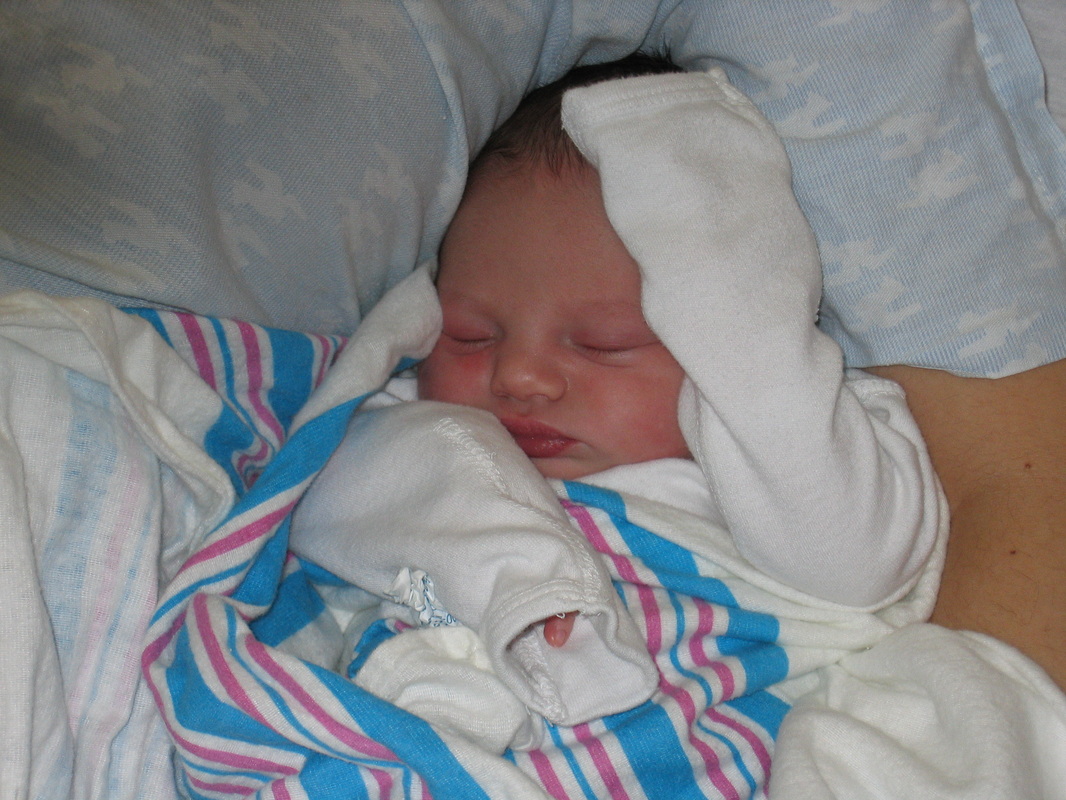
Manda the day she was born. Her little chubby cheeks were courtesy of all the fluids the hospital pumped into me prior to her arrival.


This, was water weight – which, caused my first pediatrician to freak out when she lost about 3 ounces from the time she was born – and she was a big baby weighing in at 8lbs. 8 oz.  She was a full-term, healthy little girl.  I have news for him – babies pee.  And when they pee, they will lose water weight.  Additionally, my milk didn’t come in until 3 days until after she was born.  However, she was getting colostrum and quite content.  She wasn’t dehydrated.  She was definitely doing well.

The last thing a new mom wants to have is her baby’s pediatrician worrying her and almost scolding her for not supplementing with formula.  Hello?  That’s not what nature intended!  When that doctor told me this, I was ready to whip out my boobs and show him “Hey, this is milk, man!”  I was definitely producing milk and my daughter was drinking it.  And in almost defiance, I went home and started drinking even more water, consciously, as if I were on a mission to create the greatest single milk supply ever.


Picture
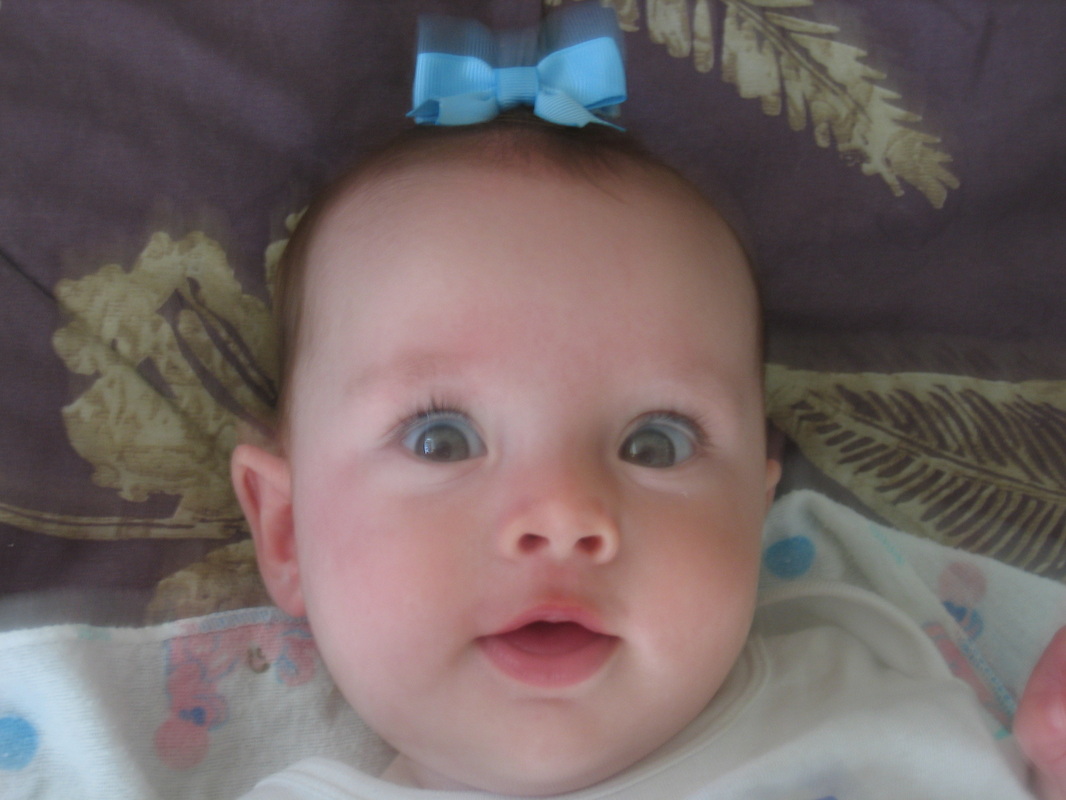
My little chubster at 6 months old, was not a malnourished exclusively breastfed baby. She may not have measured ounce for ounce to her formula fed friends, but she was totally healthy and within her weight range for her age and length.


So to make a long story short, I had to go through one more pediatrician until I found one that truly supported breastfeeding and understood that you can’t compare apples to oranges, or formula fed babies to breast fed babies, and me and my girl were much better off for it.

In a very backwards way, I also learned that you should plan on drinking more water than a camel when you nurse.

Plan on Drinking More Water Than You Ever Have Before

Breastmilk is 88% water and fluctuates a little for fat and nutrient content depending on your child’s needs and stage of development.  So it stands to reason that if you want to keep your milk supply up, you will have to drink a lot of water. Water.  Not soda.  Not energy drinks.  Water.

On the plus side, if you find that your breasts are not entirely drained after a nursing session because your baby fell asleep, you can pump a little, so you can freeze your milk in special storage bags, for future feedings, when you may have to hire that babysitter to step in for a minute.

I noticed a big difference in my milk supply when I started walking around the house with a bottle of water in my hand during the day, sipping it, and the first thing I did every morning was drink a big glass of water, and the last thing I did before bed was drink a glass of water, too.  Try to get into the habit of drinking water after every nursing session.  You are replenishing your own H2O supply.  You don’t want to become dehydrated either.

Water – it’s your friend.

Breastfeeding Is Nature’s Plan for Losing the Baby Weight Fast!

Don’t wanna diet after having a baby to get your body back?  Don’t worry, nurse!  Seriously, nursing makes your uterus contract  and your tummy flatten faster than 10,000 sit-ups, and your baby will help you burn those calories because your body will need to consume them to make milk.


Picture
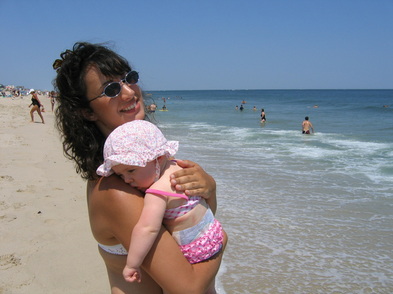
Manda's first time at the beach with me in 2005. It was 6 months after she was born and thanks to breastfeeding I was back in a bikini. I did not starve myself. I didn't go to the gym every day. This is the truth. I weighed in at about 15 pounds heavier than I am right now.


Your Boobs Will Leak

Sometimes your baby will sleep a bit longer than usual and you will feel your boobs get really full.  If you brush your chest against something, you may accidentally stimulate yourself into thinking it’s time to nurse.  These are instances when, yes, your boobs will leak.  Be prepared for it.  You don’t want unexpected wet spots on the front of your shirt.  (How embarrassing!)  They sell disposable nursing pads as well as reusable organic cotton ones that you can wash time after time. I preferred the reusable cotton ones – they were just more comfortable.  Just pop a pair in your bra and you won’t have to worry.


Nursing in Public

You would think in this day and age, people would just get over the fact that a mother nursing a baby is as natural as the sun rising.  It’s not like we are whipping out our breasts and asking for beads for boobs like at Mardi Gras.  Unfortunately, social tolerance of breastfeeding is not universal.  I got looks even at the pediatrician’s office when I was nursing Manda at a few weeks old - from mothers!  I don’t know – maybe they were afraid that their children would be scarred for life if they actually asked what I was doing, and I said “feeding my baby”?!  Even Sesame Street approached this issue in a tactful way

As Manda got older and bigger, it was hard for me to keep her tented with a blanket while she nursed in public.  Plus, she would get all hot and sweaty that way.  Many times I would go to a ladies room and feed her, or ask if I could excuse myself to a bedroom for a while at a party, or even walk back to the car where I could nurse her comfortably without making others uncomfortable or having darts shot from someone’s eyes at what I was doing.  Sadly, all of society has not changed about how breastfeeding is looked upon.  But I smile, because I know I did something right when I saw my daughter pick up her first doll, and instead of reaching for a toy bottle, she placed the doll at her chest and pretended she was nursing it.  Maybe in another generation or two, breastfeeding in public will become more socially acceptable in the United States – I hope.  But until then, be prepared, for at least one time during your nursing experience, to have to deal with those who would rather keep your boobs in the dark.  It’s the sad truth.

Yes , the Milk Tastes Good

Now, don’t get all grossed out on me.  You have to admit you were curious – how does breast milk taste?  No, I did not try to nurse myself!  Let me explain.  I made a habit of pumping my milk whenever I was not with Manda for a feeding.  I pumped it into bottles and then stored it in bags and froze it for future feedings.  When you thaw out the breast milk, by placing the bags in warm water, you have to check the temperature of it.  Of course you can put a few drops on the back of your hand and do this; but I was curious what made this liquid gold so appealing to my baby, so I tasted it when I checked the temperature.  It’s not gross.  Have you ever cut yourself and put your finger to your mouth and tasted your own blood?  Do you swallow your own saliva?  Your child is drinking this delicacy from you and they don’t think it’s disgusting.

The best way for me to describe what breast milk tastes like is that it’s sweet and thin in consistency.  If you’ve ever tried rice milk, breast milk is a pretty close cousin.  It makes sense that it would be on the sweeter side to be appealing to a little one, as well on the thinner side to be highly digestible.

- -

So when all is said and done, let me tell you what made me persevere through the pains and peas, the sleepless, bottleless nights, and the social stares.  When my daughter was about a month old and she was nursing in a sling I wore so I could actually get something done around the house, she had enough coordination to move her arms where she wanted them to go.  One of her first purposeful movements was to take her little hand, while she was nursing and gently place it on the side of my breast.  I can still close my eyes and relive that moment.  She literally touched my heart.  With that one gesture it was as if she said “Thank you” to me and showed me how comforted she truly was.  That, made it all worth it to me more than words can say.

Picture
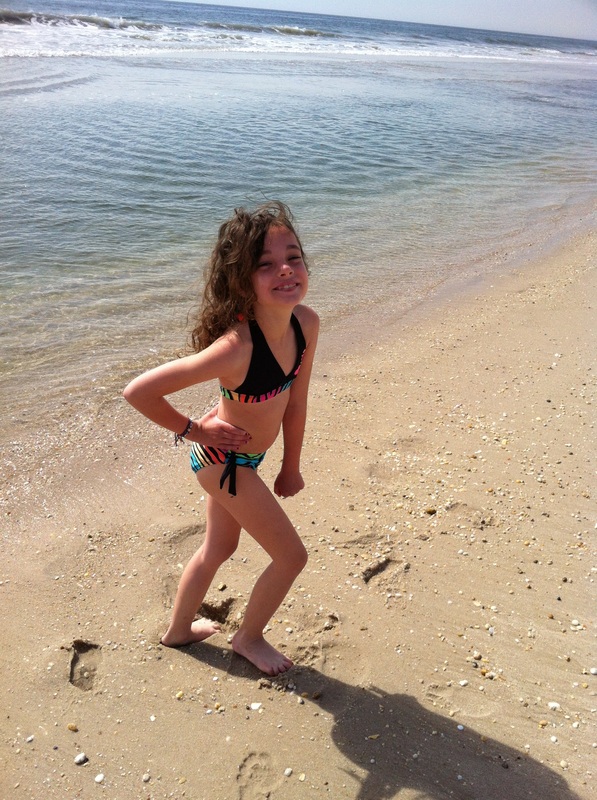
My 7 year old in 2012 - just a proud momma picture. :)


This was not the blog I originally intended to publish today.  I’m going to save that one, with a much brighter focus, for next week.  The Sandy Hook school shooting has caused a national outcry, and the one thing everyone can all agree on is that we are beyond sad about it. And we are angry.  And no matter what is done, we cannot bring back the lives of those who were lost.


Picture
Photo Courtesy of dax4u

Surrounding this event, there has been the inevitable discussion about guns and gun control.

The truth is that if we banned hand guns, any psychotic monster like the one who committed the heinous-beyond-comprehension attack on the Connecticut school children yesterday would have used a shotgun, rifle or perhaps another type of weapon.  People who are on illogical and inhumane missions to destroy others and have no regard for their own lives will use whatever means necessary, even if not officially deemed a weapon to carry out their attacks. We all remember the attack on the World Trade Center.  How many of us ever thought of using airplanes as weapons of mass destruction before?  Not me.

So the question is, are we as United States citizens willing to forsake our right to bear firearms as civilians?  I’m not; and I’ll explain why.

I’m fully aware that this is a serious topic, especially following yesterday's terrible tragedy. I know that many will oppose my opinions; however, there has got to be a middle ground for any solution to really work.

Most people who commit these kinds of killing spree crimes are not licensed to have guns in the first place. People will always find a way to get them no matter what the gun control laws are. Unfortunately, when people want more restrictive gun laws they are targeting a population of people who legally embrace the second amendment to the Constitution, by going through proper licensing and background checks, which in most situations is NOT the crazy person who will buy a gun on the black market or steal one to cause harm.

There will always be some insane jackass who wants to cause harm by any means. How do we prevent someone from going off the deep end, and if not using a gun, resort to a bomb, or other method of madness against an innocent portion of the population? That is the key.

The people that do go through proper licensing to bear arms do it for one of four reasons - self defense, defending others (as in police officers), hunting, and collecting/hobbyist/occasionally go to a shooting range.  As an American citizen I would like the option to be able to defend myself and my child against maniacs like this if the situation need be.

When we had Hurricane Sandy in NJ, people were without power for weeks. No power means no alarm systems work. We could barely get signals on our cell phones to call for help if we needed to. People were stealing generators out of neighbors’ backyards and stealing gas to run them, too. If someone wanted to break into a dark cold house thinking that they were going to do some looting, they probably could have, and in some cases did. Would I want to be a female with a child in the house at night, in the dark, absolutely defenseless?  Um, no.

What about this idea:  maybe it should be easier for a person to get and carry a gun, but in a very controlled way.  Just entertain this idea for a minute:  What if the process to obtain a gun permit is regulated a lot more, while keeping the availability of guns intact (not automatic weapons – there’s a big difference)?  It would be hard at first to achieve the results we want, but if everyone (or almost everyone) carried a gun and knew how to use it, the thrill of carrying one when you aren’t supposed to would be diminished.  Not only that, but if you tried anything funny, you would know right away that chances are, with a room full of people pointing a gun at you, you’re not going to get away with it.

Like punishment for breaking laws, if the penalties and consequences (in this case knowing that there is an armed population around you) were stricter, you'd see reduced crime.  Instead, most first offenders of anything get a slap on the wrist and go out and become repeat offenders.  If you have a great enough deterrent in the first place (like an ARMED police officer at each school), some lunatics would think twice before going on a shooting spree in a school.  And yes, you will always have a crazy one who doesn't care if they die in the process of hurting others....so they will try to cause harm regardless.  You can’t ban crazy. But you know what? If you plant someone in that school who is trained to kill a psycho like this, chances are that psycho won't kill many or any.

Teachers are supposed to act like defenders now anyway - armed or not. They are the unarmed front line protecting our children. That just doesn't seem right to me. They need backup that works.

If we left the decision to hire armed personnel at schools up to school funding, then poorer districts would not have as adequate defense as those with more money to spend. My guess is that this would have to be a Federal mandate that requires a trained officer or personnel to be present at every school.

We place a lot of responsibilities upon educators already.  They are expected to be care givers, teachers, counselors, referees, and now defenders and protectors of our children. When you introduce the element of a psycho maniac attacking children, that just ups the ante and now they are expected to defend and protect our children without a means that really works.

Training teachers how to pull shades down in schools, turn the lights off, and walk kids out in single file lines (depending upon the situation) just isn't enough.  So do we start training combination teacher/security officers or do we hire separate staff to stand guard? I'm fine with either solution, really. I just think if you forced teachers into a training program to carry guns, not everyone would go for that who wants to become a teacher. It could potentially narrow down the population of those who want to become teachers because they don’t want to be put in that position, where they have to be focused on simultaneously educating our children while having eyes in the back of their heads to take out trouble. Plus, if you've got someone elderly teaching versus someone younger and more agile, that wouldn't make sense to assume they all would be comfortable and capable of defending children. Hire the big guys with the big guns to protect our kids, I think.

Banning guns doesn’t prevent people from going crazy and killing others.  They will just find another means to execute their madness, unless there is a measure put in place to stop them at the front line.  Crazy doesn’t rationalize.  The only thing that speaks to crazy is the action that if you do this, we’re going to put a bullet in your brain and stop you, period.


Due to the extreme sensitive nature of this topic all comments will be subject to strict moderation before publication.

This blog was also published at the above links via Patch Media, and was published nationally via The Vine on Patch.


Do you want to know the real answer to the burning question if the world will end on December 21, 2012?  I consulted a Mayan scholar who has unveiled the secrets of the Maya in his book, 2012 Science & Prophecy of the Ancient Maya, and what I learned definitely shed some light on the subject.

Picture
Book cover courtesy of Dr. Mark Van Stone and Tlacaélel Press © 2010

I had to hurry up and get this blog in before the end of the world!  You know, 12/21/2012.  The Mayan calendar says “Time’s up!”

The world will end on December 21 or December 23, 2012, depending on how you interpret the Mayan calendar...and if you believe that when their calendar ends, life as we know it will, too.

I wish I had the ability to predict the future as many people feel the Mayans could and can do with accuracy down to the date of significant events.  So when it comes to figuring out the future, who better to consult than an expert in Mayan-ology, if you will - Dr. Mark Van Stone - author of 2012 Science & Prophecy of the Ancient Maya.

Mayan scholar, Dr. Mark Van Stone peels apart the Mayan calendar on the pages of his book for those wanting to learn the translation of the symbols and the meaning behind the myths.  While going through the appendices, I was interested to find out facts about how the Mayan system of counting is a base-20 because people in the tropics didn't wear shoes, and they used both their fingers and toes to count!  These are the kinds of interesting tidbits you will find scattered throughout his book.

Although this collection of essays is technical in nature, the introduction is very helpful in mapping out a way you can navigate the book.  Van Stone recommends reading it out of order, selecting chapters of your choosing, which may strike your interest on a personal level.  I loved this presentation, as I'm all for trying things in unconventional ways.  Reading a book out of order made this interesting to me, and I liked being able to sit down for five or ten minutes at a time to digest independent, but related nuggets about Mayan civilization, knowledge, and predictions.  (Plus, the way my days go, I rarely have time to sit for a spell without interruptions.  Reading short excerpts of a technical nature made this publication easy to digest in several sittings.)

Right from the get-go, Dr. Van Stone confirms and dispels many of the predictions that scientists and mythologists have perpetuated over time.  He does corroborate that there will be a galactic alignment of the earth and sun during the solstice along the Galactic Equator, but places it in perspective, as this event has happened several times before, since the dawning of time. 

He also acknowledges that the Mayan monuments contain errors, and the Maya believed that if you made a mistake, you don’t erase it.  So… we can deduce from that, what you read in the Mayan culture is not necessarily accurate – and it’s always open to interpretation. Add to that, that their calendar is in a way cyclical, and as Dr. Van Stone puts it in his book, “much more is missing than is there” when it comes to accounts of Maya myth, and you certainly have a mystery.  Cyclical to the Mayans isn’t what cyclical truly means to us, though.  We think of our calendar as starting over with each new year. For the Mayans, when one era ended, it was just making way for a new era, that would be much greater than the one that had just passed.

When you add in the knowledge that different Mayan city-states had different methods of time keeping, just as they had differences in their language and building materials, this just makes it all that more difficult for those translating their stories to do so with complete accuracy.


Picture
Courtesy of Dr. Mark Van Stone


One of the compelling elements of 2012 Science & Prophecy of the Ancient Maya is the capture of photographs of the glyphs and the diagrams of what the symbols mean.  Just as we have a calendar we use in modern times, remember that the Chinese have a rotation of animals marking time, and other cultures differ in their methodology as well.  When December 31 on the Gregorian calendar approaches each year, does the world end?  When the Chinese complete a year of the Rat is it destined to repeat, or will life as we know it cease to be?  When you put the Mayan markings into a framework like this, then maybe we can begin to understand and appreciate a society that was so astrologically advanced beyond their time, that time, was not just measured in days, but centuries beyond what they could see.

The Mayans, in their wisdom, also predicted what was to happen on their calendar date 13.0.0.0.0 (the equivalent of 21 December 2012).  There is a Mayan document that refers to this date and says that a god, Bolon Yokte’ will “descend”.  The problem is, the glyphs that spell this out – are broken.  So no one knows what this god will do once he descends, and it’s anybody’s guess as to the details.  This is where legend begins and factual support ends.  The best that experts can explain what Bolon Yokte’ is, is that it’s a god of change, destruction, and period endings.  S/he wasn’t written about very often, either.

One thing that is for sure is that the Mayan date 13.0.0.0.0 does correspond in real time to 2012, and according to Mayan inscriptions, this “will be a time of great change.”  Change, is constant.  Great change is subjective and open to interpretation.

What else is interesting is that in other Mayan glyphs, they refer to time in notations of billions and billions of years – whether referring to the future or the past.  Dr. Van Stone hypothesizes that the Mayans did this “simply because they could”, and they also did it to express religious awe – sort of like how the Bible marks people of its time living for over a hundred years.  If this is the case, the Maya chronologized events that would happen long after December 21, 2012, and that infers they believed that life would go on, for a long time afterwards.

Also, Dr. Van Stone mentions the possibility that 13.0.0.0.0 on the Mayan calendar could be the equivalent of “when your car odometer rolls over to a million,” and suggests that this date could have been like any other date, just like the year 2000 was to us in recent times.  We all panicked over Y2K, and after it happened, it wasn’t a cataclysmic event like some thought it would be.

After reading this, I asked myself, is the Mayan story of the end of a period of time any different from Revelations in the Bible?  Is it a way that a civilization chose to record their thoughts about the end of an era or the end of human kind?  Is the Maya legend the focus rather than the measure of when these events were predicted to occur?

The Mayans loved to write about the ends of previous eras, or worlds, if you will.   According to them, mass destruction of life had happened many times before, so why wouldn’t it happen again? When they wrote about their versions of Armageddon, the destruction of these worlds in the past was very complete.  At the same time, the Maya wrote about new beginnings.  Aside from some animals surviving, the new eras were complete do-overs. So if the Mayans meant that on December 21 life as we know it would end, well, you can be assured that they meant total destruction.  And if a new cycle was to begin again, it would be from the bare-bones on up, starting with the re-creation of the Sun and the Moon. 

As a writer, I have to ask myself – did the Mayans limit themselves to non-fiction writing?  Or did they like to embellish, tell stories, and venture in to the fictional as well?  Scholars like to regard the glyphs as historical accounts with some semblance of accuracy.  However, even as children we learn to use our imaginations and can be very good story tellers in the realm of fantasy, drawing upon truthful experiences so others can relate to our tales.

As a novice epigrapher, I looked at the Mayan glyphs in the novel as an artistic presentation of their language and relied on the English translation of their broad meanings.  But if you are more scientifically inclined, this is a reference tool that can engage the most sophisticated translator in deciphering the meanings of the Mayan markings.

So, will the world end on 12/21/2012?  You’ll have to read Dr. Van Stone’s book to find out.  I’ve always believed that coincidences are not just coincidences.  There’s a reason why we notice patterns.  It’s all just a matter of the correct interpretation to understand what these patterns mean.

And if we are still here on May 9, 2013, Dr. Van Stone has graciously offered to give 10 of TheLadyinRedBlog.com readers free electronic copies of his book during the Red Hot Birthday Bash.  If you can't wait that long, check out his interactive edition for the iPad.  It's amazing with its use of video and graphics as exemplified in the video below.


Dr. Mark Van Stone's "2012 Science & Prophecy of the Ancient Maya"
book trailer


You can connect with Mark Van Stone, Ph.D. (Professor of Art History at Southwestern College) by visiting his website, his YouTube Channel, on Facebook, or following him on Twitter @mayatruth.

His
books may be purchased on amazon.com or you can enjoy the interactive iBook experience here.


PRESS RELEASE: Purr’n Pooch Pet Resorts To Host American Red Cross of New Jersey’s Pet First Aid Course for Dog and Cat Owners - Tuesday, October 16th, 7:00-10:00 p.m., 86 West Gilbert Street, Tinton Falls, NJ

Picture
Credit: Purr'n Pooch Pet Resorts


Tinton Falls, NJ (October 1st, 2011) – The American Red Cross of New Jersey will host a Pet First Aid Course at Purr’n Pooch Pet Resorts, located on 86 West Gilbert Street in Tinton Falls, NJ, on Tuesday, October 16th, 2012 from 7:00-10:00 p.m. Just like with people, accidents and emergencies can happen to animals so being prepared could make a lifesaving difference. The cost per student is $70 and registration is requested online at www.redcross.org or by phone at 1-800-REDCROSS.

“All of us at Purr’n Pooch Pet Resorts have peace of mind knowing that our over 50 employees have the Pet First Aid Training necessary to take life saving actions on behalf of our clients and pets,” aid Elizabeth Palazzo, Purr’n Pooch Pet Resorts. “We are now thrilled to partner with The American Red Cross to offer other pet owners from across the region the special opportunity to learn the basic training that could potentially save their pet’s life during en emergency.”

Participants will learn how to respond to health emergencies and provide basic first aid for their four-legged family members. Practice and preparation will help owners to remain calm and effective in an emergency, protecting the owner and his or her animal from further injury or suffering. The Dog and Cat First Aid Course length is 2 1/2 – 3 1/2 hours.

The curriculum covered in the three-hour Pet First Aid Course includes:

•   Understanding basic pet owner responsibilities.

•   Administering medicine.

•   Managing breathing and cardiac emergencies.

•   Managing urgent care situation.

Every participant will receive a complimentary book and dvd. The illustrated "Dog First Aid" and "Cat First Aid" books outline symptoms and procedures for common ailments and emergencies. The author, Bobbie Mammato, DVM, MPH, is an emergency and critical care veterinarian who also has a Masters in Public Health. In addition to her duties as a part-time small animal practitioner, she is a disaster relief consultant to The Humane Society of the United States.

For more information on Purr'n Pooch Pet Resorts and other upcoming events, visit www.purrnpooch.com or call (732) 842-4949.


Starting your day with a “clean slate”? – well, this is not that kind of clean slate – but it’s a “slate” by a similar name that got my attention because it’s a really cool and environmentally friendly tool for children and adults.

Picture
Two RED KleenSlate "paddle" wipe-off boards, a rainbow assortment of markers, and a microfiber cloth. Read on as to why this is not just ANY whiteboard, but the ultimate whiteboard package.


I’m typically not a product reviewer, but sometimes, a really excellent product or service gets my attention and I want to share the news about it.

My daughter and I try to be green.  She’s in second grade and has spelling words to practice among other things, that she can only really learn by repeatedly writing them at home….over, and over, and over again.  That’s a lot of paper!  There’s got to be a better way to doodle and write without killing so many trees in the process.  Chalkboards are fun, and she has one; but when she wants to hang out in her bedroom and write things again and again for her school assignments, I really don’t appreciate the chalk dust on the carpet…and on her bed…and on her computer….and on the dog….  You get the idea.  This is what led us to search for a wipe-off board – but not just any wipe-off board – the ultimate wipe-off board.  We found one, from KleenSlate Concepts, and this is why it’s so cool.

First, color may not be important to you as a parent, but to my child, if she has a choice, she’d like something “cool”, in her favorite color of the moment.  KleenSlate wipe-off boards come in black, green, orange, yellow, red, purple, pink, pink, and blue. Color selected – now onto the practical points.

As a parent, I got tired of drawing those “penmanship practice” lines on regular white boards, so she could align her letters when writing.  Plus, even when I drew the writing guides, they would smudge as she wrote on top of them.  KleenSlate must have felt my frustration because they have paddles that come with a blank side and on the other side you can customize it with a replaceable “sheet” that comes with writing lines.  Tah-dah!   So now Manda can erase her letters, but not the lines, and keep on writing!  (And I don’t have to keep drawing the lines anymore either! Yippee!) There are also more replaceable, self-sticking sheets you can customize your two-sided paddle(s) with. They’ve got one for writing music, one for drawing graphs, and even one with intersecting circles (Venn).


Wait, let’s back-track. I said “two-sided paddles”.  Let me explain a bit about KleenSlate’s innovative design.  These white board paddles come in either a circular or rectangle shape with handles.  The white board has a handle because if you want to hold up the white board to show your parents your picture, for example, your fingers don’t cover the surface.  You’re not blocking your design, and you’re not getting ink on your fingers this way.  Secondly, I can see this being used in a classroom where the teachers and students can hold up their non-permanent creations to show their friends and teacher easily. (KleenSlate actually has ordering options which would be very cost-efficient for teachers to implement in their classrooms, enabling them to order them in quantity.)

The two-sided concept is cool because you can customize your paddle so one side is blank, for example, and the other side contains lines.  This is the set-up that my daughter uses on hers.  That way she can draw her pictures or math problems without lines interfering on one side; yet she has the convenience of flipping it over for another use.  As I said, if you don’t want writing lines on one side of the paddle, you can choose other options, like having a double-sided blank board, one side with a graph, or even customize your creation, too.

Let’s talk about erasing, too.  Depending on the wipe-off board you have, and the kind of supposedly erasable markers you purchase, erasing the board can be a real pain. I’ve been down this route before.  Some boards, you have to wash off, and I’m not a fan of that.  If you’re not around a sink, it’s inconvenient.  Plus, you wind up with a damp board that you have to dry when you’re done.  Extra steps don’t excite me or my daughter.  Then, you’ve got the wipe-off boards where the surface and markers are incompatible and you have to put a lot of elbow grease into rubbing it clean.  That’s not a way to for a product to score brownie points with me either. 

Picture
KleenSlate paddles are easy to wipe off. If you apply their marker ink over marker ink that's previously dried on a white board, (and you know how tough that can be to remove) - it will wipe right off! That's an amazing ink formula!


What I love about KleenSlate is: 

1 – it comes with a marker that stores right in the handle so you’re never searching for one; 

2 – the marker has a cap that contains a soft eraser on the top so you’re not searching for a soft cloth to erase with; and

3 – You can also purchase a microfiber cleaning cloth from KleenSlate if you want to clean your board quickly and easily.  The cloth comes on a small ring you can attach to the bottom of your KleenSlate handle, too, so you’ll never lose it.

The marker ink is very wipeable – the microfiber cloth and integrated erasers on the markers remove the ink from the paddles with little effort.   This is a plus for kids who don’t have the strength and stamina to rub like crazy to clean off the ink.  A black marker is included with each paddle, but you can also order a 10-pack of assorted colors, each with an integrated eraser on them. The colors are bold and not wimpy and the ink doesn’t stink.  (Ever get those markers that have that chemical smell? Yuck.  You don’t have to worry about that with these.)  Thick markers are also available if you prefer.

If after a while your board surface starts looking a little worn from wear and tear (we know kids can be rough), or if you just feel like changing one of the sides, you can order replacement surfaces, again, in the design of your choice – plain, with lines, graphs, or even customize it on KleenSlate’s website.  You just stick the replacement surface of your choice right on top of the side of your paddle you want to change.

Don’t just take my word that this is an awesome product for the price.  KleenSlate won the Teacher’s Choice Award in 2008 for “Best in Classroom Tools”, too.  And I’m all for saving paper and being green.

And here’s a little tidbit for you – KleenSlate is going to be one of the RED HOT  sponsors for The Lady in Red’s “Red Hot Birthday Bash” on May 9, 2013!  What’s the “Red Hot Birthday Bash”?  You haven’t heard? Well, TheLadyinRedBlog.com turns one year old on May 9, 2013, and The Lady in Red wants to celebrate with her readers by giving out some amazing RED or RED HOT gifts to those who enter giveaways sponsored by some RED HOT vendors like KleenSlate.  It’s a WORLD-WIDE virtual party!

This means KleenSlate will be offering a brand new KleenSlate surprise pack to a lucky reader who participates in the “Red Hot Birthday Bash” giveaway extravaganza when the time comes.  Details will be announced in April 2013.  (As a side note, there are a LOT of really cool vendors with RED or RED HOT products that will be participating WORLD-WIDE in the “Red Hot Birthday Bash” next year, by giving away lots of goodies to readers.  I can’t wait to announce them in April 2013!  If you’ve got a RED or a RED HOT product you’d like to feature in the bash, here are more details on what you get in exchange for participation, and you can contact me here!)


You can place your order at KleenSlate.com, connect with KleenSlate on Facebook at : http://www.facebook.com/KleenSlate and Tweet with them here @KleenSlate01


Some say that placing children with special needs in separate classes is segregation and unnecessary separation.    Based on two recent examples, I’m not so sure.  If they get the attention they need, and don’t require too much time of the one teacher responsible for twenty, maybe that’s the best and safest way for all to learn.


I’m not an expert on autism, but from my understanding there is an autistic spectrum, where some children, may exhibit only some mild signs of autism – perhaps poor coordination, or they focus on certain things for longer periods of time than usual, or maybe they have tactile issues.  Then, there are other children who display more severe autistic traits, and can have difficulty learning because of reduced attention spans, or maybe even display signs of aggression under circumstances where an observer can not understand why the child would act out in that manner.  Different children may require different ways of learning and different amounts of assistance in school depending on how autistic they are.

Autism has always been around.  However, either due to better diagnoses, or environmental influences, there are more cases of autism now than ever beforeBecause of this, schools are taking a closer look at students who are autistic and have tried to decide the best way to provide an education for them, as well as their classmates.

Until recently, I wasn’t quite sure if all schools were like American schools when it came to how they place and assist autistic children in classrooms.  In recent years, schools in the United States, and I’ve now also found out in England, as well, have started to mainstream autistic children into regular classrooms as much as possible.  I think this is a good idea, for the most part.  However, sometimes, this can backfire, big time.

A friend of mine, who lives in England, relayed to me a story about her five year-old son starting school. Like most children, he had the expectation that every other child is just like him.  Why not?  Most kids will smile at you, play with you, and are friendly right off the bat.  However, it never occurred to this child’s mother to tell her son that there may be children in his class that look just like him, and act just like him for the most part, but sometimes – they may need extra help, or they may not always act like he does. 

Maybe sometimes they will get frustrated more easily, or they may cry and he may not understand why.  And maybe, sometimes, there will be children that out-of-the-blue, although rare, may decide that they want to take out their frustration on him.

That’s exactly what happened on his fourth day of school this year.  Another little boy decided to pummel my friend’s son to the ground in school.  Thankfully, the boys were separated and no one was physically hurt.  However, if you were a five year-old and had a classmate wallop you upside the head and knock you to the ground for no reason, with force, and intention, you would probably be pretty emotionally traumatized by it, and you definitely wouldn’t understand why.

The boy that did the pouncing is autistic.  I’m not saying that he is typical of all autistic children, but there are children, like him, who do need more attention than one teacher in the classroom, spreading her attention thin over 20 – 30 students, can give.  (And yes, I also understand that a child who is not autistic can also act out and become violent as well.  Of course this is not something isolated to autistic children.)

But while some people may think that I’m generalizing, I also question if it is right to broadly generalize that all autistic children should be “mainstreamed” into the classrooms where there is typically one teacher per 20 or more students.  I don’t think it’s fair to the child that needs special help;  and I don’t think it’s fair to the other students in the same class because those three or four children are taking time and attention away from them in school, causing distractions, and in this case, causing a problem.  Not all autistic children that are placed in regular classrooms are given aids.  It’s not an automatic thing.

I know school budgets are tight.  I know that many districts can not afford the cost of aids for many of these children.  But what is the cost of NOT doing that?  Will the children with autism that need additional supervision and instruction get less of an education as a result?  What about the students that do not need extra help, but now have to share the same classrooms with children that monopolize the teacher’s time with their behavioral issues?  Are these students getting the time with the teacher that they need?

I’m not proposing across the board segregation. But I am proposing closer evaluation of some students who have special needs and consider placing them in classrooms where they can get the attention and support they need so they can safely and effectively learn in school, and others can, too.

I’ll give you another example of mainstreaming gone wrong.   Another woman I know was volunteering to help with a first grade activity.  All of the first grade classes were participating, including, those children who were autistic.  Some children had aids with them; some did not.
 
The woman was volunteering to lead a simple science experiment, consisting of setting up trays of water with a mild soap solution in them and some paint, so the children could make bubble paintings. She was told she needed to set up the trays and give activity instructions to the children in small groups.  The groups changed tables and went from activity to activity. 

She was never told that there were some special needs children in the groups that could require extra supervision.   She knew that there were aids in the room, but thought that if a child was in the group without an aid, they did not require any extra watching over. So this woman had the expectation that if she clearly explained to the six year-olds to blow air through the straw to create bubbles, a few times, that the children, would do as they were told.

What happened was, the aids were busy taking pictures in the classroom and not watching the few children that really did need their help.  The volunteer did not know by sight which children needed extra attention.  One of the autistic children at the table wound up drinking some of the soapy paint solution as a result.  The child was not hurt, but he had a bad taste in his mouth and blue teeth.  (Understandably so.)  After the parent volunteer realized what happened, she overheard one of the teachers call for the aid to come give the child some water so he could rinse out his mouth.

Should the aid be blamed?  No one is perfect.  Should the parent be blamed?  No.  She didn’t know that the child generally did not follow instructions or needed special assistance.  Should the parent have been made aware ahead of time that there were autistic children present and she should give certain ones extra attention – yes!  Or, perhaps any children that were not able to participate at the expected level of a first grader in this experiment should have been given separate supervised instruction to begin with, for the safety and enjoyment of everyone.

My intention is not to say this because I want to make autistic children feel bad or different in a hurtful way.  It’s because, if I were the parent volunteer, I would not want anything to happen to any child.  If you aren’t aware of a special need, how can you address it?

Thankfully the soapy solution was not toxic and no one was worse for wear in the end.   However, unless that school changes its policy of informing parents and volunteers about the potential situations they may get into as a result of unsupervised special needs children, I don’t think she will be volunteering her time again – which is a shame.

Maybe some autistic children can assimilate into regular classroom environments without assistance; but maybe some can’t.  Maybe some need extra help.  And maybe, mainstreaming isn’t right for everyone all of the time.